The Moschophoros (calf-bearer)
circa 570 BC
Athens
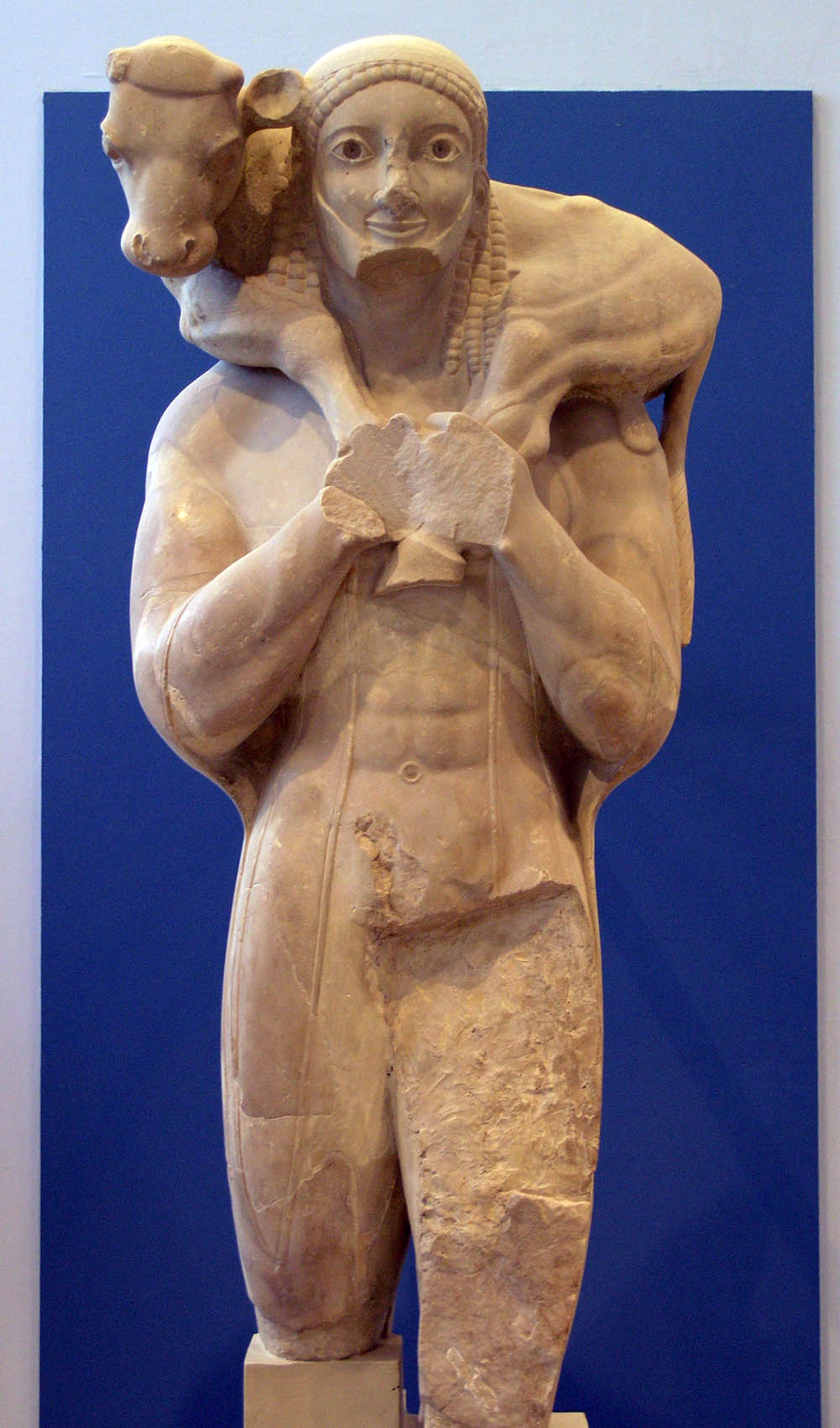
The sculpture itself is not as refined as later Greek artworks, and there is an element of naiivity about the artwork. This is prominent within the face, where the detail becomes much simpler.
Classical:
Began in 5th century B.C.
Ideal, perfect figures almost godlike figures
Beginning: only male nudes
Later: female nudes with draperies
More natural figures with turned heads
Sculpture: Natural form/In action or in rest/Marble/The sculptures were painted…lost due to weathering sculptors: figured out all body proportions
Sculptures of Gods and athletes
-Developed the idea of classicism
-Pursuit of perfection
-Think posh Everything is perfect
Greek buildings are mathematically faultless
Only stable wealthy societies can achieve classicism
Sense of optimism within society
Ancient Greece – highest form of “taste and style”
-Knowledge and intelligence
Poseidon (or Zeus) of Cape Artemision
c. 460 BC.
Athens
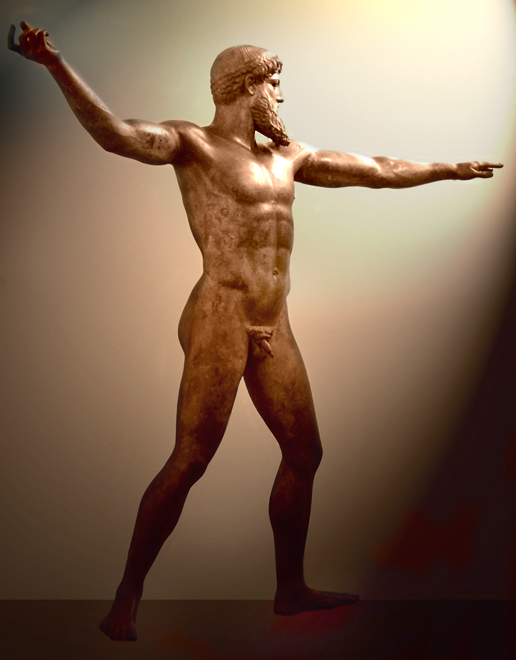
The figure is very refined and there is lots of detail that emphasizes the muscles of the figure. Its pose is very dramatic adding much more emotion to it than the Archaic sculptures.
Hellenistic:
Laocoön and his sons
200 BC.

The Hellenistic sculpture is very dramamtic, structured with many strong diagonals it makes the artwork much more dynamic. There is a great emphasis on the figures' facial features, therefore making the work more emotive than early sculptures.

No comments:
Post a Comment